Sweet Lullaby ( 3 hours )
100+ countries
Families in over 100 countries fall asleep to our lullabies every night.
Years on YouTube
A growing library we've been carefully crafting for several years.
Classical melodies
Real lullabies — Brahms, Mozart, Twinkle Twinkle — gently rearranged.
No harsh sounds
No sudden flashes, no loud effects — designed to soothe, never startle.
About this lullaby
We made this one 2 hours and 39 minutes long for a reason. Long enough that you will not be tiptoeing back in to press play again. Short enough that it is not still going at noon the next day. That covers several full sleep cycles in a row. When a child stirs between cycles the same quiet melody is still there, and most of the time they settle back down on their own.
We keep the recording quiet and even on purpose. There are no vocals to pull a drowsy mind back toward listening, and no bright instruments fighting for attention. Nothing in the track ever gets louder than the passage before it, which is the single most important thing for keeping a sleeping baby asleep.
Safety for little ears and eyes is the whole point. No jump scares, no loud advert breaks inside the video, no sudden bright moments. Being able to leave something running near a sleeping baby is rare, and it is exactly what we set out to make.
Every track rests on classic lullaby melodies rather than generated background noise. We play them the unhurried way a music box would, rounding off every sharp edge. A familiar melody plus a calm tempo is a powerful pairing, because a child recognizes the shape of the tune even half asleep, and recognition itself is soothing.
What you see is as quiet as what you hear. There are no flashes, no quick cuts and no bright color changes anywhere in the video. It is safe to leave running all night with the screen dimmed.
None of this is magic, it is just how a small nervous system responds to sound. A young nervous system tends to fall into step with what is around it, so a slow, steady sound invites slower breathing and a slower heartbeat. It gives the room one smooth, predictable sound instead of a dozen random ones.
If you want this to work its best, make it part of a repeating routine. A lullaby played once is just background sound, but the same one played nightly becomes a habit the body knows. The melody stops being just music and becomes a cue your child's body reads without thinking.
Bedtime is the obvious use, but families reach for this at other moments too. Nursery rooms, daycare quiet time, travel cots and unfamiliar hotel rooms all become easier with a steady sound. Wherever your child sleeps, a sound that stays exactly the same helps an unfamiliar place feel a bit more like home.
If this one works for your child, the channel has the same quiet approach in other lengths and with other characters, all free to watch. Once you find a length and a character that click, you will always have somewhere to go.
Questions parents ask
Why is this lullaby good for sleep?
It is quiet in a way most videos for kids are not. The piano stays at one soft level, the animation barely moves, and there are no surprises anywhere in the mix. A child's nervous system reads all of that as a signal that it is safe to switch off.
Can I leave it playing all night?
This version runs for 2 hours and 39 minutes, so it covers falling asleep rather than the whole night. If you want music until morning, the channel has the same style in 10, 16, 20 and 24 hour versions.
Is it suitable for a newborn?
It works well for newborns as long as you keep it quiet. At that age the steady, unchanging sound is the important part, more than the melody or the picture. A flat, low lullaby helps cover household noise and gives a very young baby one calm, constant thing to rest against.
How loud should I play it?
Keep it low. A good test is whether you can hold a normal conversation over it without raising your voice. If you can, the level is right. Loud lullabies tend to keep children awake instead of settling them, so when in doubt, turn it down rather than up.
How fast do babies fall asleep to this lullaby?
Usually within the first two or three tracks. If your child is already tired and the lights are low, the soft opening melody does most of the work. Children who hear the same lullaby every night fall asleep faster over time.
How to use this lullaby
- Start 15-30 minutes before bedtime. Play softly in the background as you read a book or finish the bath routine. The classical melody signals to your child’s brain that it’s time to wind down.
- Keep the screen out of reach or face down. The animation is calm, but a baby doesn’t need to look at it — the audio alone does the work.
- Pick a length that matches the night. 1-2 hour mixes are great for naps; 8-10 hours covers a full toddler night; 16-24 hours runs from bedtime through morning without ever cutting out.
- Volume: barely audible. A common mistake is playing lullabies too loud. Set it so you can just hear it from across the room — that’s the sweet spot.
More lullabies to try
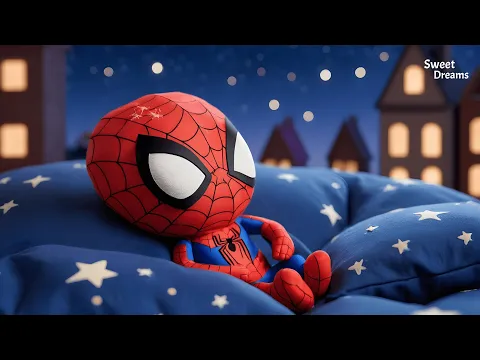
Spider-Man Sweet Lullaby (3 hours)
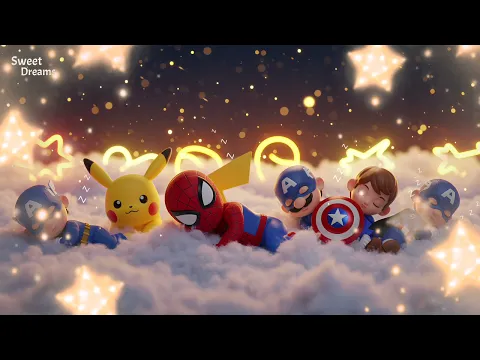
2.5 Hours of Calm Sleep with Spider-Man, Pikachu & Heroes – Soothing Lullaby

4 Hours Spider-Man & Sonic Lullaby

Baby Sleep Fast Tonight – Spider-Man Calm Lullaby – Beat Insomnia – Mozart & Brahms Lullabies

Lullaby Spiderman is Sleeping Cutely in Bed
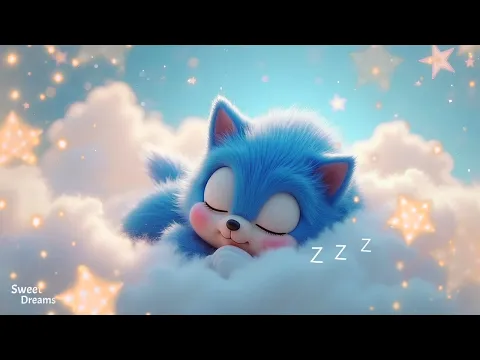
Sonic Lullaby
More character lullabies
Every kid has more than one favorite. Explore other characters from our catalog: